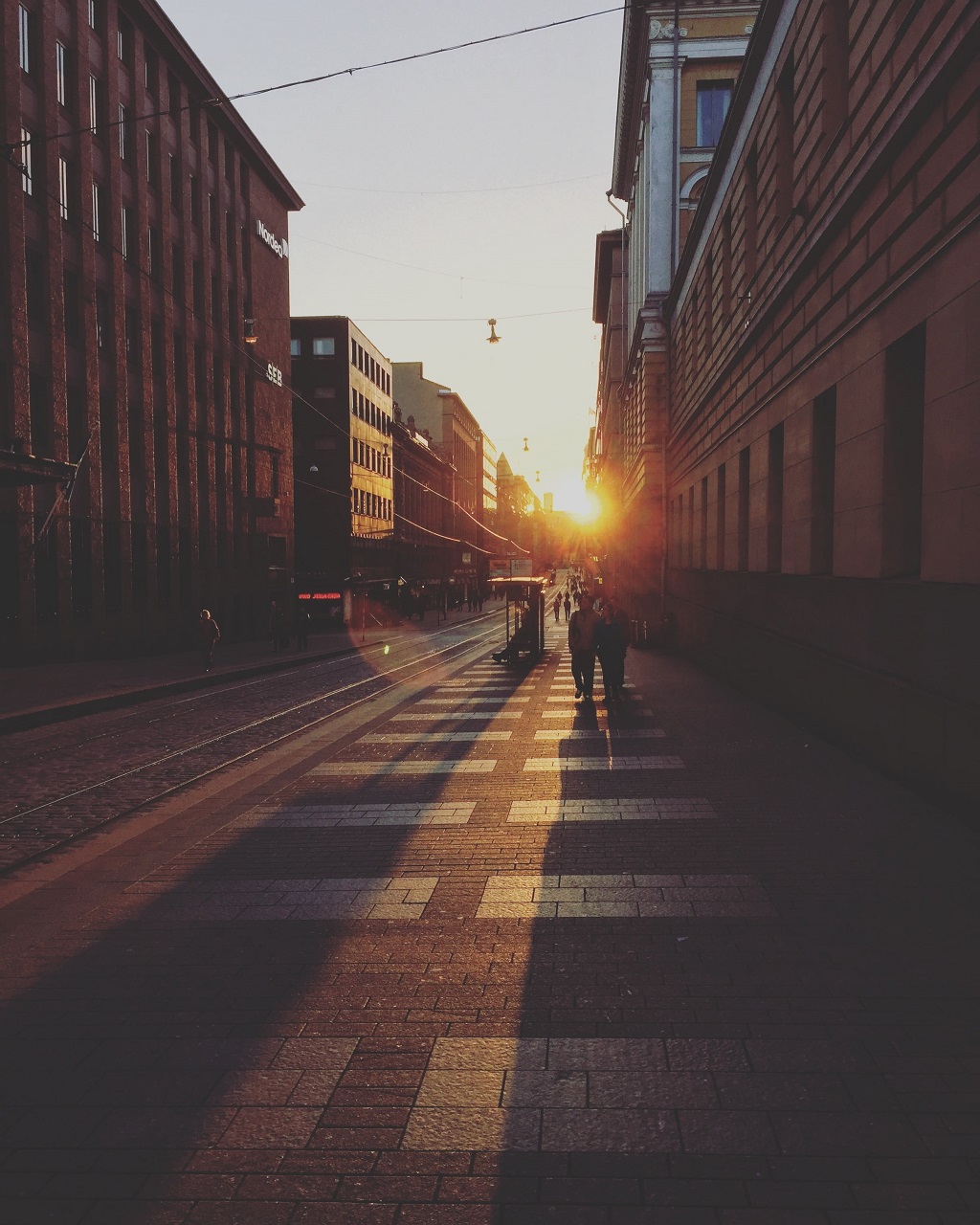
The plates are cleared. The kitchen is warm. The sofa is right there.
In Italy, many people head outside instead. The passeggiata is a slow, unhurried stroll with no destination, a daily ritual in towns across the country. It usually happens in the early evening, and there is an after-lunch version on Sundays and holidays. Nobody calls it exercise. It is just what you do.
That is tradition, not evidence. But it points at a question most walking advice ignores.
We usually talk about how much you walk, or how fast. This series asks a different question: when you walk, and how often you need to. We start with timing, and with one of the best-studied examples there is: the walk after the meal.
What happens in your body after you eat
When you eat, the carbohydrates in your meal are broken down and the sugar enters your blood. Blood glucose rises, your body releases insulin, and the level comes back down over the next hours. The rise after a meal is known as the post-meal (or postprandial) glucose spike.
A short, easy walk puts your leg muscles to work. When a muscle contracts, it moves glucose transporters called GLUT4 to the surface of its cells so it can pull glucose in from the blood to use as fuel (Richter & Hargreaves, Physiological Reviews, 2013). Contraction does this through a pathway that works alongside insulin's. That is the standard explanation for why light movement soon after eating tends to flatten the curve.
That is all the physiology you need. The more interesting question is what the studies actually found.
The study that made it famous
In 2016, a New Zealand research team tested a simple idea on 41 adults with type 2 diabetes (average age 60, average diabetes duration 10 years) (Reynolds et al., Diabetologia). In a randomised crossover design, each person spent two weeks on each of two kinds of advice:
- walk 30 minutes once a day, or
- walk 10 minutes after each main meal.
Both pieces of advice met the usual physical-activity guidelines. Glucose was tracked every five minutes with continuous monitors.
The researchers looked at the total rise in blood sugar over the three hours after a meal. It was about 12% smaller when people walked after eating than when they took one daily walk. After the evening meal, which contained the most carbohydrate and came when people were most sedentary, it was about 22% smaller.
Note what was being compared. Not walking versus sitting, but the same advised amount of walking, at different times. That is what made it interesting.
What the bigger picture says
One trial is a story. A pooled analysis is closer to a pattern.
A 2023 systematic review pooled eight randomised crossover trials with 116 people, 47 with type 2 diabetes and 69 without, comparing exercise before a meal with exercise after one (Engeroff et al., Sports Medicine). Exercise after eating reduced the post-meal glucose rise compared with exercise before eating and compared with no exercise. Exercise before eating did not significantly beat doing nothing. The shorter the gap between the meal and the activity, the stronger the effect, which led the authors to conclude that the benefit is greatest when you start as soon as possible after the meal.
A separate 2022 meta-analysis looked at breaking up long periods of sitting with short bouts of movement (Buffey et al., Sports Medicine). Seven one-day trials, mostly in adults with overweight or obesity, found that light walking breaks lowered post-meal glucose and insulin compared with continued sitting. Standing breaks helped glucose too, but walking breaks did better. Those breaks were spread through the day, so this evidence is about interrupting sitting rather than about walking right after a meal.
Three different questions, one consistent direction: a little gentle movement, soon after eating, helps your body handle the meal.
What this does not mean
This is where it is easy to oversell.
- It measures a short-term response, not long-term health. A smaller glucose rise after a meal is a measured effect. It does not prove that the habit prevents diabetes or heart disease.
- The studies are small. Reynolds had 41 participants and compared two weeks of advice, not months of behaviour. The pooled review rated its included trials as having a high risk of bias. The overall result in Reynolds was also borderline: the confidence interval ran from 0.78 to 0.99, and 1.0 would mean no difference.
- The evidence comes from specific groups. Reynolds studied only people with type 2 diabetes. The pooled review mixed people with and without it. Buffey's trials were mostly in adults with overweight or obesity. How large the effect is for any one person is not something these studies can tell you.
- It is not a reason to skip your long walk. A 10-minute stroll after dinner is an add-on, not a replacement.
So: not a miracle. Possibly a very cheap upgrade to walking you were going to do anyway.
What a practical version looks like
The studies suggest a recipe simple enough to remember:
- Duration: about 10 minutes. The pooled review mentions 20 minutes of walking as an example, but the trial this post is built around used 10.
- Pace: easy. This is a stroll, not a workout.
- Timing: as soon as is comfortable after the meal.
- Which meal: if you only do one, start with the largest. In the Reynolds trial the evening meal showed the strongest effect.
If you have diabetes or take glucose-lowering medication, talk to your doctor before changing your routine around meals.
Your 7-day experiment
No equipment, no tracking, no target.
For seven days, take a 10-minute easy walk after the biggest meal of the day. Around the block, up the street, along the corridor if the weather is bad. Do not measure anything. Just notice how you feel afterwards — energy, heaviness, mood.
At the end of the week, you will know whether your own passeggiata has a place in your day. And if it does, you have made your walking more useful without adding a single extra minute to your schedule.
---
Next in the series → Part II: Walk Today, Sleep Tonight? We look at what research actually shows about walking and sleep, and what it doesn't.
Related: Why 7,000 steps may be enough (how much) · The brisk-walk reward (how fast).
Make every walk count
TrailQuest is a free Android app that turns your everyday steps into virtual progress along the legendary trails of your choice.
▶ Get TrailQuest