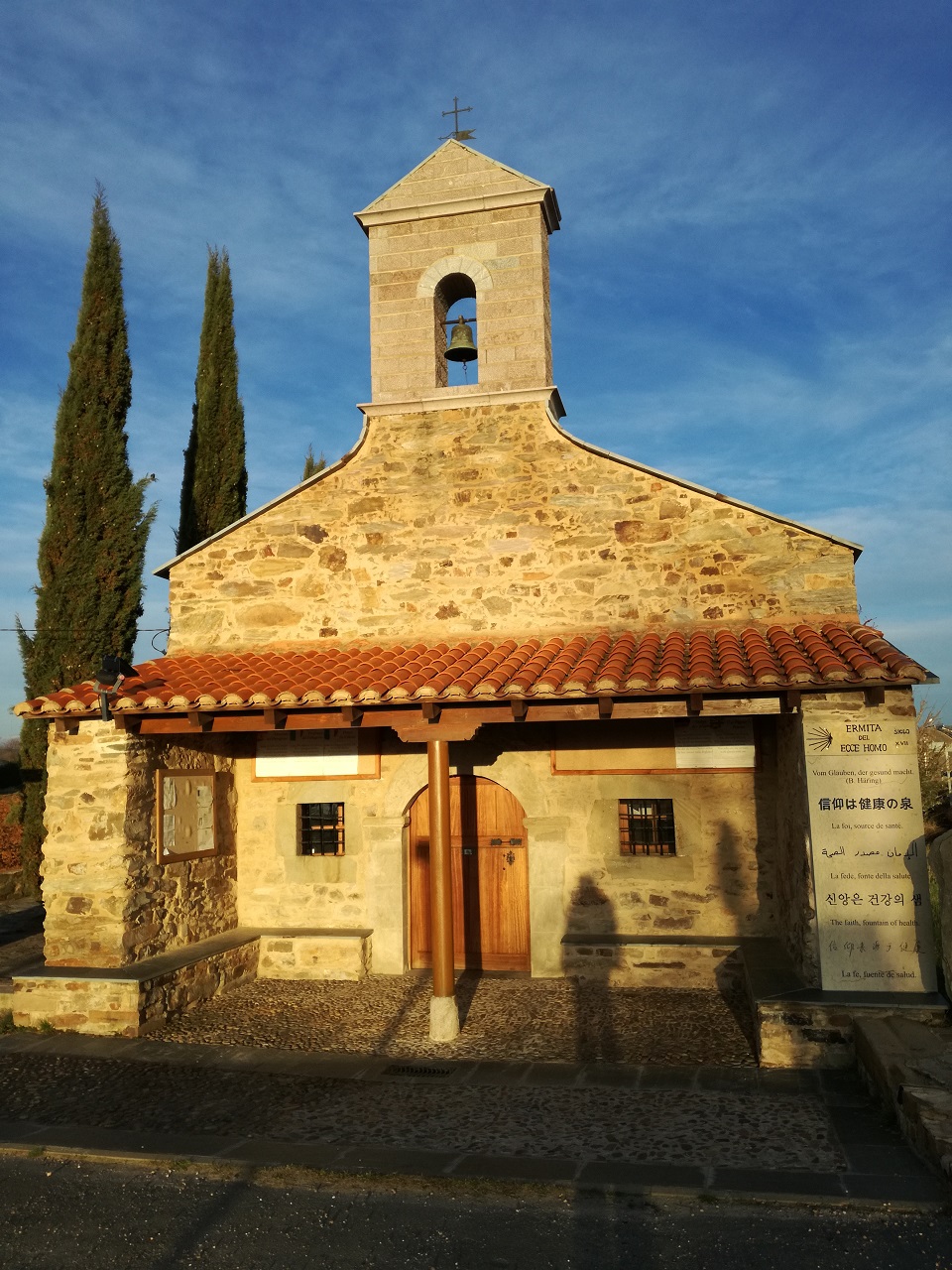
Ermita del ECCE HOMO, Astorga, Camino Francés
The first question people ask me when I tell them I walked 1,331 km across Spain is not “how did you prepare” or “how long did it take.” It’s this: “Are you religious?”
The answer, at the time, was: not particularly. I was a burned-out person who had been told by everyone around me — including my doctor — that I needed to change my environment. Completely. For a sustained period. Walking to Santiago seemed like the most efficient way to do that.
What I didn’t expect was that the Camino would work anyway. Profoundly. Without the religion.
The Surprising Demographics
Here is a fact that surprises most people: the majority of modern pilgrims who walk the Camino de Santiago do not describe themselves as religious. The Pilgrim’s Office in Santiago — which issues the Compostela certificate and has tracked pilgrim motivations since 1986 — reports that roughly 40% of pilgrims cite “religious” or “religious and other” as their reason for walking. The remaining 60% list motivations that are explicitly secular: personal challenge, cultural interest, recovery from something, the need to think.
Source: Oficina del Peregrino, Santiago de Compostela, 2023
This has been the trend for decades. It accelerated sharply after Paulo Coelho published The Pilgrimage in 1987 and Emilio Estévez’s film The Way came out in 2010. The trail didn’t change. The people walking it did.
What Non-Religious Pilgrims Are Actually Looking For
I stayed for a night in a small village called Pueyo de Fañanas, early in the Aragón section. The place was a converted medieval monastery — stone walls, thick silence, a courtyard where pilgrims sat in the evenings and talked. I spoke with a doctor from Seoul who was recovering from a clinical burnout. A retired teacher from New Zealand walking the trail as a tribute to her late husband. A software engineer from Berlin who hadn’t taken more than four consecutive days off in six years and had, in his own words, “simply stopped functioning.”
None of them had come for the theology. But all of them were looking for something the theology had always promised: a rupture with ordinary life that is complete enough to actually work. A context in which it is impossible to pretend that things are fine when they are not.
The Camino doesn’t care why you came. It treats everyone the same: it gives you blisters, it gives you silence, and it gives you exactly as much time to think as you can bear.
The Mechanism
I became somewhat obsessed, on my own Camino, with understanding why this works. Not spiritually — I mean mechanistically. What is actually happening in a human nervous system during five to seven hours of daily walking in unfamiliar terrain, over a period of four to six weeks?
The research is not complete, but the outlines are clear. Sustained rhythmic movement — particularly walking — reduces activity in the default mode network, the part of the brain responsible for rumination, self-referential thinking, and the recursive loops that characterise anxiety and depression. This is not meditation. You don’t have to try. The walking does it for you.
Add to this: no screens, irregular sleep in shared dormitories that somehow becomes deep sleep, food you eat because you’re genuinely hungry, and the company of strangers who know nothing about who you are at home. The result is something that feels, by the third week, like a factory reset. Not a metaphor. Something that happens in your body whether you intended it or not.
The Community That Has No Prerequisite
One of the things I didn’t anticipate about the Camino was the ease of connection with other pilgrims. Not the superficial ease of a hostel or a tour group. Something stranger: the absence of the usual friction that makes it hard to talk honestly to someone you’ve just met.
On the Camino, everyone has already answered certain questions. You know, without asking, that the person next to you got up this morning before dawn and walked for hours to be here. You know they slept badly and their feet hurt and they chose to be here anyway. That shared context does something. Conversations that would take months to reach in ordinary life happen on day two.
Religious and secular pilgrims coexist without tension. They share albergues, they share meals, they share the path. The elderly Spanish man praying the Rosary and the Berlin software engineer walking in silence are doing something more similar than either of them realises.
What You Take Home
The most common thing I hear from people who have walked the Camino — regardless of why they went — is that they returned changed in ways they cannot fully account for. Not transformed in the dramatic conversion sense. Changed in the way that matters more: certain things stopped being complicated.
Decisions that had seemed paralysing became obvious. Relationships that had seemed obligatory became optional. Work that had seemed urgent became perspective. This is the secular version of what religious pilgrims call grace, and it appears to arrive through the same mechanism: prolonged physical difficulty in a context stripped of ordinary distraction.
You don’t have to believe in the apostle buried under the cathedral in Santiago. You don’t have to believe in anything in particular. You just have to be willing to walk until the noise in your head runs out of material.
Most people find that happens somewhere around day fourteen.
Walk the Camino from your front door
The good news is that you don’t need a month off work and a flight to Spain. The physical benefits of sustained daily walking are available to you right now, wherever you live. TrailQuest puts you on the Camino Francés virtually — and gives you a reason to keep walking long after the novelty wears off.
▶ Get TrailQuest on Android