Most people who walk the Camino Francés end in Santiago de Compostela. They cry at the cathedral, collect their Compostela certificate, eat Pulpo a la gallega, and fly home. The Camino is done. The box is checked.
I did all of that. Then I kept walking.
The Camino That Doesn’t End in Santiago
Finisterre — Fisterra in Galician — sits 90 km west of Santiago, at the very tip of the Iberian Peninsula. The Romans called it Finis Terrae. The end of the world. Before Columbus, this was literally where the known world stopped. Beyond these cliffs: nothing. Just the Atlantic, stretching west into the unknown.
Medieval pilgrims didn’t stop in Santiago either. They kept walking to Finisterre to see where the known world ended. The tradition of walking the extra 90 km is as old as the pilgrimage itself — most modern pilgrims just don’t know about it.
I knew. And I had started my Camino in Barcelona, not Saint-Jean-Pied-de-Port like most people. If I was going to walk from the Mediterranean to Santiago, I wasn’t going to stop until I reached the other ocean.
1,331 km from One Sea to the Other
My Camino started on a February morning, with my feet literally in the sand at Barceloneta beach, a bottle of San Miguel in hand, looking out at the Mediterranean. Thirty-eight days and 1,331 km later, I was sitting on the rocks above the Atlantic.
The last day to Finisterre is brutal in its own quiet way. The Camino signs disappear — you’re on your own now, past the official ending point. The landscape shifts: the lush green of Galicia gives way to something more exposed, more elemental. Pine trees, bare rock, wind. The trail follows the coast and you start glimpsing the ocean between the hills.
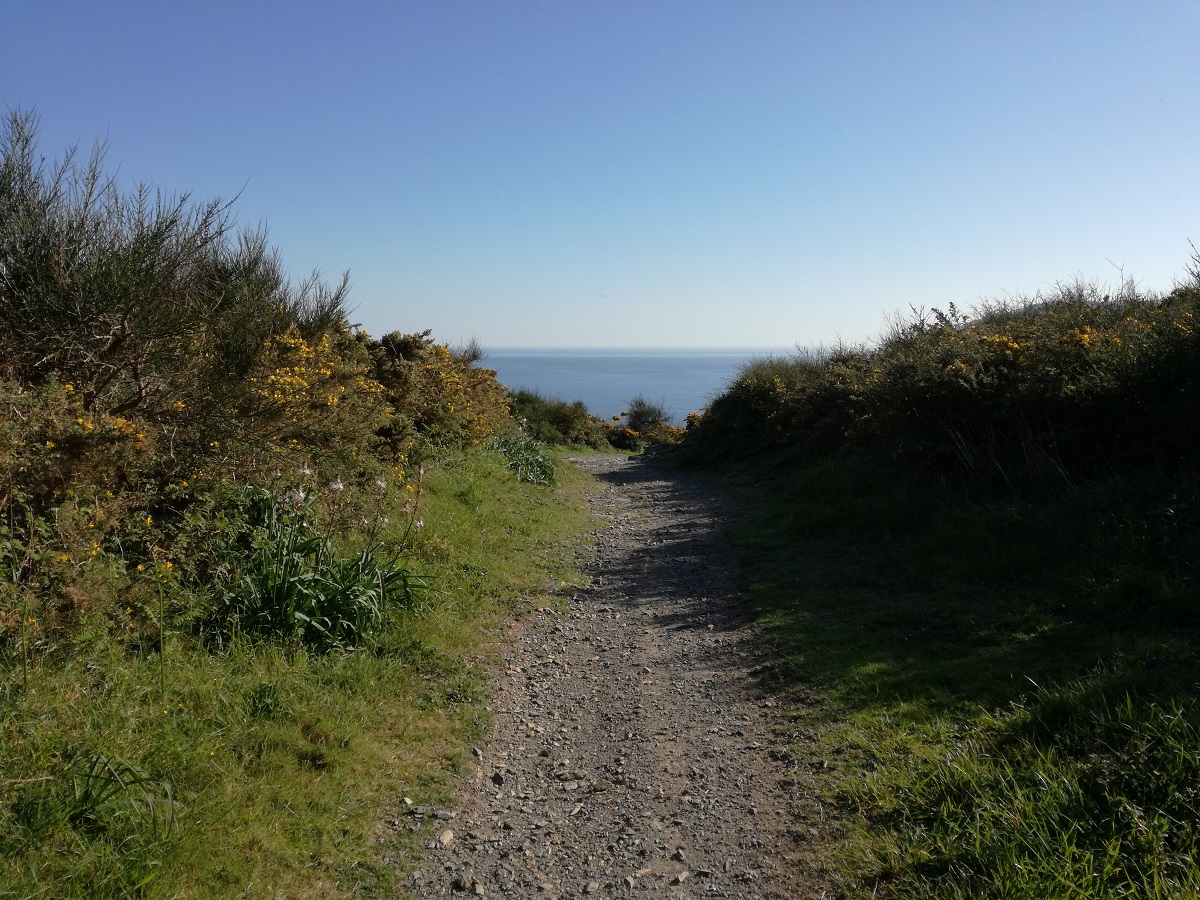
First glimpse of the Atlantic. After 1,300 km walking east-to-west, this view stops you cold.
After 30 km of walking, the Atlantic appeared below me for the first time — and that first sight, after a month of walking inland, hit me harder than arriving in Santiago had.
What Happens at the Lighthouse
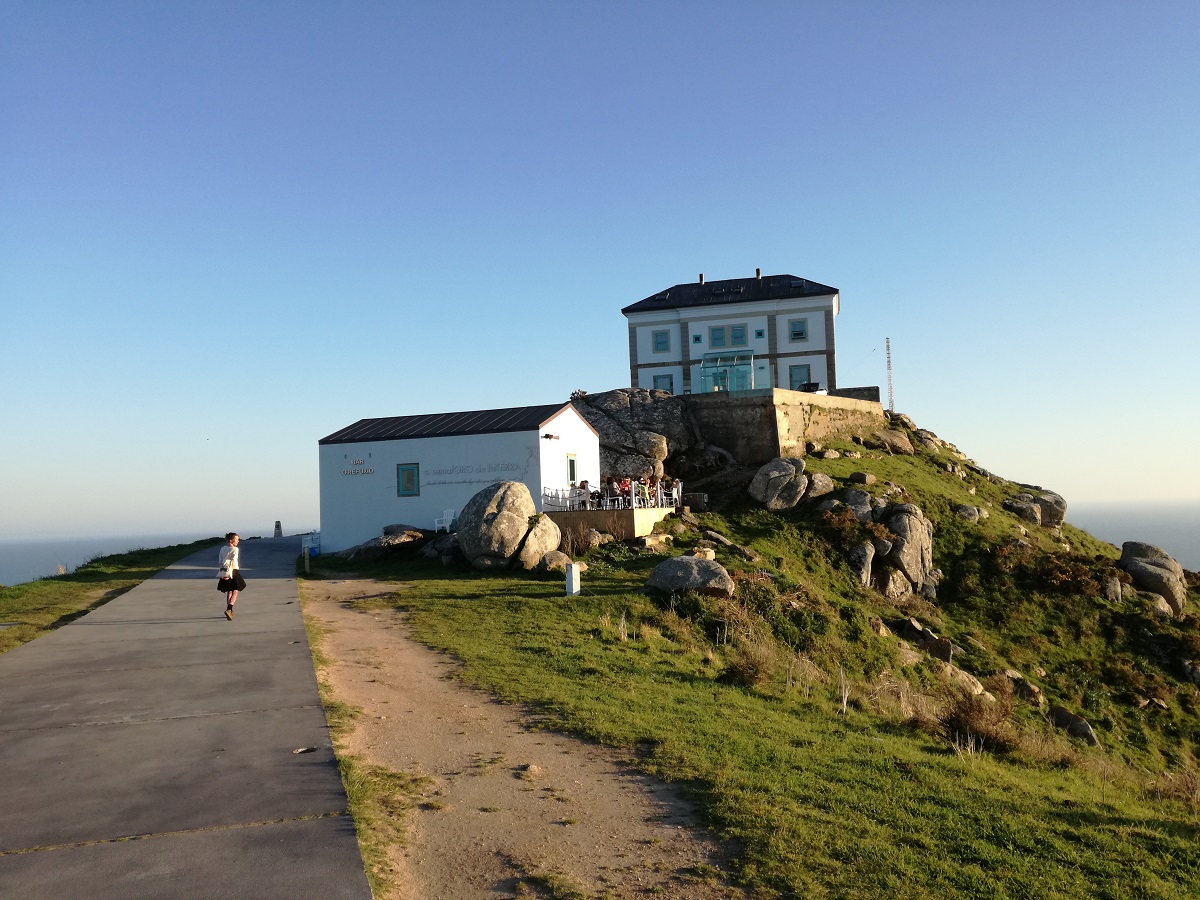
The lighthouse at Finisterre. Nothing between you and America.
The lighthouse sits on a headland above the ocean. There’s a stone cross near it where pilgrims leave things — shoes, walking poles, notes. Some burn their clothes. The tradition is releasing what you carried — literally and otherwise. I left my trekking poles there. I’d carried them from Barcelona. They weren’t going back.
Then I sat on the rocks and waited for the sunset.
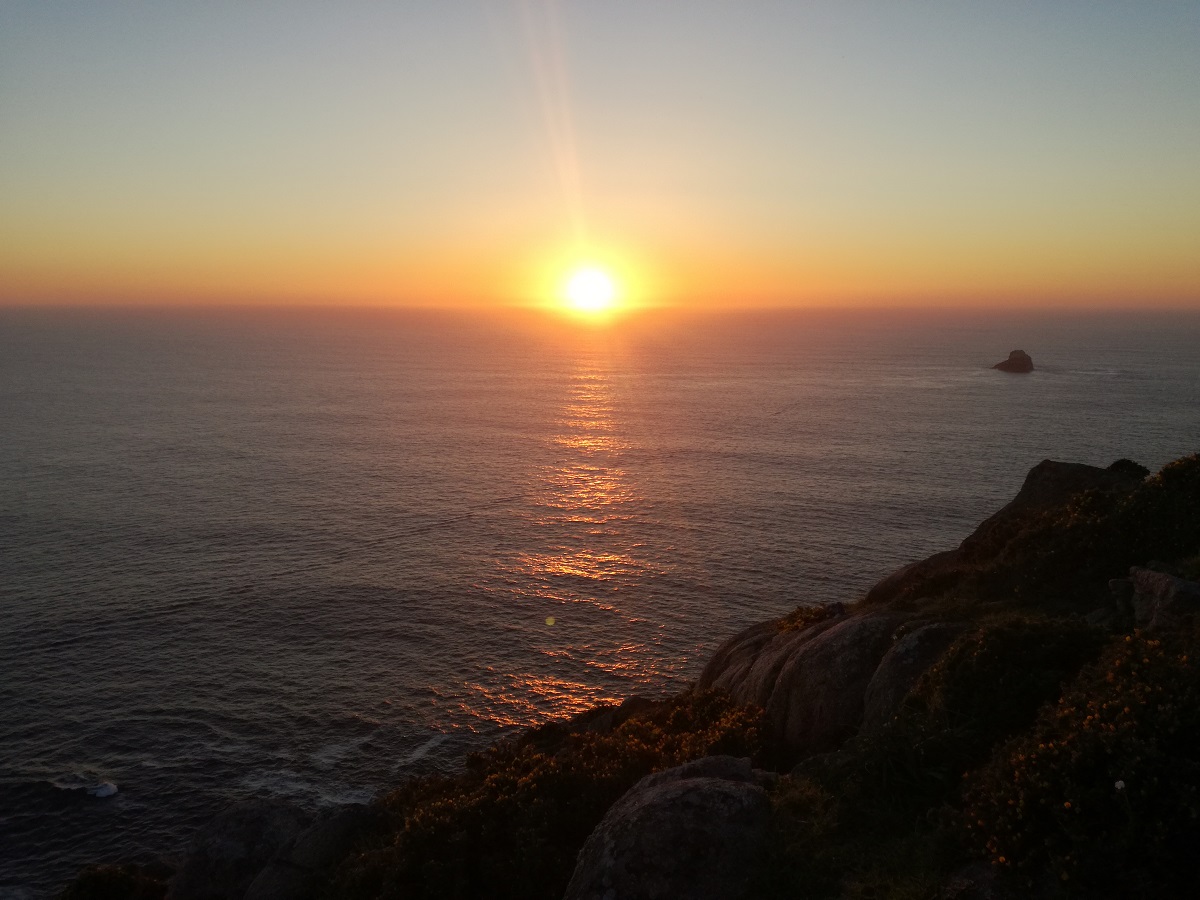
One of those Atlantic sunsets that lasts an hour.
It was one of those Atlantic sunsets that lasts an hour — the sky going through every colour before the sun drops into the water. Scattered across the rocks around me were maybe ten other pilgrims, all watching in silence. Nobody was talking. There was nothing to say.
I had walked from the Mediterranean to the Atlantic. I was done.
Why Most People Don’t Go
The honest reason most pilgrims stop in Santiago is exhaustion. By the time you reach the cathedral, you’ve walked 780 km. The idea of walking another 90 is almost offensive.
But the other reason is that nobody tells you to go. The Compostela — the official certificate — is issued in Santiago. Finisterre doesn’t appear on the maps people carry. It exists slightly outside the official story of the Camino, in the older, stranger version of the pilgrimage.
Which is exactly why it’s worth going.
The TrailQuest Connection
When I was building TrailQuest — an app that converts your daily steps into virtual progress on the Camino Francés — I kept thinking about Finisterre. The official trail ends in Santiago at km 780. But the real ending, the one I remember, is the lighthouse. The silence on those rocks. The poles left at the cross.
That’s what I wanted TrailQuest to capture: not just the distance, but the feeling that every step is going somewhere real. That the walk means something beyond the step count.
Finisterre isn’t in the app yet. But it’s coming.
(If you want the full 38-day version of this walk — from the Mediterranean to the Atlantic — I wrote about it in a book: “On Foot from the Mediterranean to the Atlantic.”)
Buen Camino
If you’ve walked the Camino and you stopped in Santiago: go back. Walk the extra 90 km. Sit on the rocks at the lighthouse and watch the sun go down over the Atlantic.
The Camino doesn’t have to end where everyone else ends.
Walk the Camino from your front door
TrailQuest turns your daily steps into real progress on the Camino Francés — with HealthSpan Score, streaks and trail lore. Free on Android.
▶ Get TrailQuest on Android