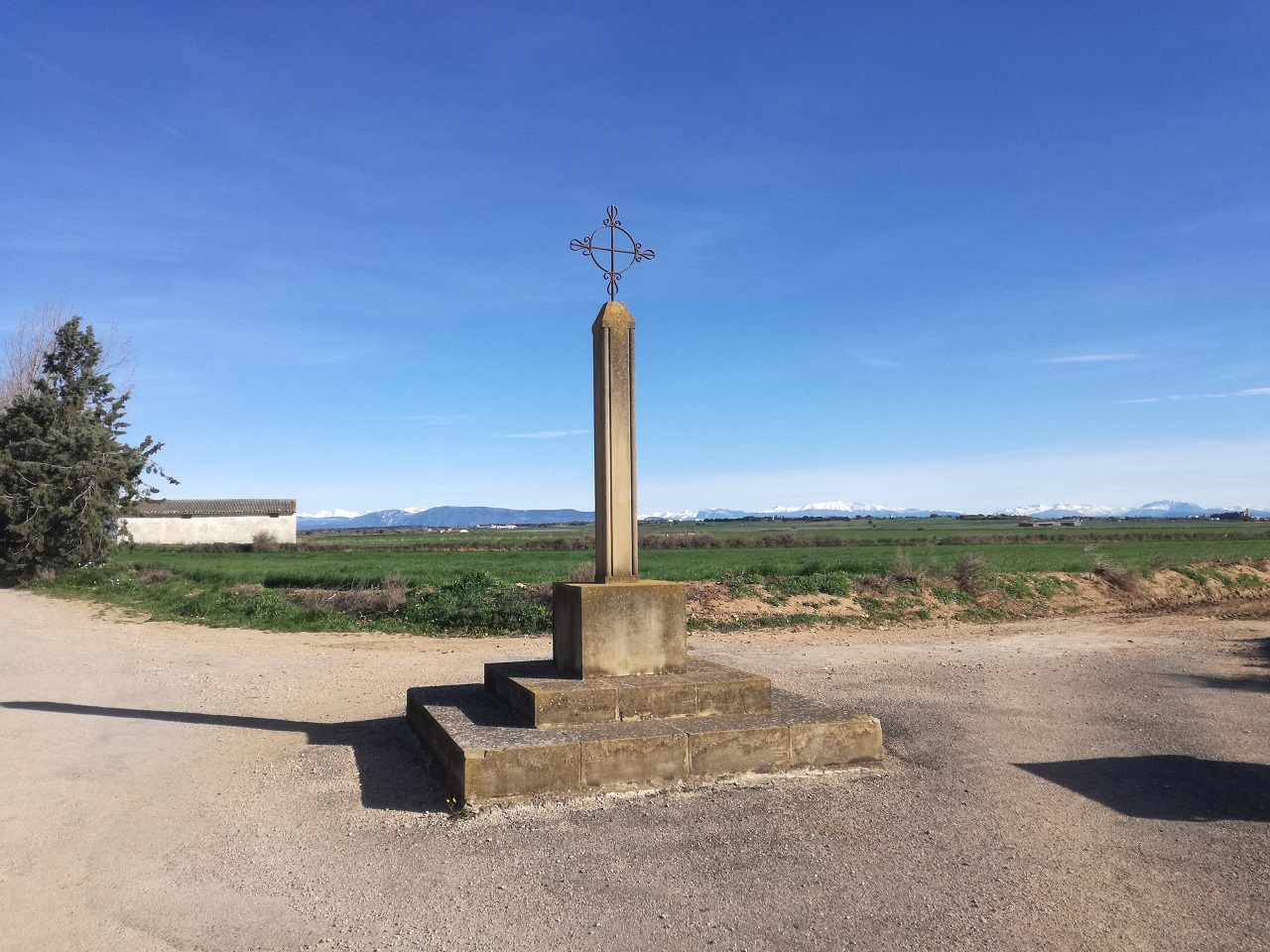
The road into Catalonia on day 3. 35 km walked. The albergue is locked.
Day 3. I’ve walked 35 kilometres since morning and I can barely lift my feet. I’m standing outside a locked albergue in a small town in Catalonia, darkness falling, wondering if I made a serious mistake signing up for the longest Camino that exists — 1,331 kilometres from Barcelona to Finisterre, alone, with no physical preparation.
Then someone starts talking to me.
The Stranger Outside the Window
His name is Ignazio. He’s in his fifties, built like a man who has spent his life outdoors. He asks if I’m okay. If I need a hospital. If I need food or medicine. If I know the route for tomorrow. He offers all of this without introduction, without hesitation, with an urgency that suggests he considers helping me genuinely important.
I try to thank him and offer money. He refuses. He asks for exactly one thing instead.
“When you reach Santiago — when you kneel at the tomb of the Apostle — remember me in your prayer.”
I’ve been thinking about that moment for years. It contains, I eventually realised, the entire logic of the Camino.
A Medieval Barter System Running in the 21st Century
What Ignazio was participating in is something I started calling, in my notes from that first walk, the Economics of Salvation. The name came to me later, reading Tomáš Sedáček’s Economics of Good and Evil — a book I’d recommend to anyone who has ever wondered why markets and morality are so entangled.
The phenomenon is this: all along the Camino, ordinary people — not pilgrims, just locals — go out of their way to help strangers they will almost certainly never see again. They volunteer in pilgrim hostels for free. They walk you to the next albergue when you’re lost. They leave water and fruit at their gates. They drive you across town at midnight because the hostel you booked was already full.
And when you try to pay them, they almost always say the same thing: pray for me in Santiago.
Each one of them encountered this economy.
Source: Oficina del Peregrino, Santiago de Compostela, 2026
Why “Economics”?
Because at its core, this is an exchange. Not a gift — an investment. The hospitaleros and the Ignazios of the Camino are not acting out of pure altruism. They’re making a calculated bet, operating on exactly the kind of rational self-interest that Thomas Hobbes would have recognised immediately.
They believe — or hope, or at minimum trust — that a pilgrim who reaches Santiago will honour the request. That your footsteps have spiritual currency. That by investing their time, food, and care in you, they are purchasing a small share of whatever grace your pilgrimage carries.
This is, at its heart, a medieval futures market. The commodity is intercessory prayer. The collateral is your physical suffering on the road. The transaction closes at the tomb of St. James.
Why “Salvation”?
Because it only works if you believe. Or more precisely: it only functions as an economy if the person investing believes. They don’t need you to be devout. They don’t even need you to be religious. They just need to believe that a prayer said at the right place has value — and that a pilgrim, however secular, will feel enough gratitude to say one.
This is the remarkable thing. The Economics of Salvation is built on asymmetric faith. The investor believes completely. The debtor may believe very little. And yet the system runs perfectly, because by the time you reach Santiago — if you do — the Camino has changed you enough that you want to honour those debts. Not because you feel obligated. Because you understand, after weeks of receiving unexplained kindness from strangers, that this is how the whole thing works.
“What a high-risk investment — giving your time and energy to a stranger who may never reach Santiago, who may not pray, who may not even believe. And yet they do it anyway.”From my journal, Igualada, first Camino
The Infrastructure of the Invisible Economy
This wasn’t always informal. In the Middle Ages, the Economics of Salvation was institutionalised. The Knights Templar built hospitals along the route — the same word that gives us hospitalero today. They provided shelter for the sick and armed escort for the vulnerable. They believed, with theological precision, that protecting pilgrims earned them spiritual merit that mattered.
Today the infrastructure is softer but the logic is identical. The hospitaleros are volunteers who take a week of their own time to run a pilgrim albergue for nothing. The mayors of small villages give 45-minute multimedia presentations to exhausted walkers and then personally walk them to their beds. Old women leave water bottles outside their front gates with small notes in four languages.
All of them, at some point, will ask you to pray for them. And most of them will tell you, with a particular kind of wistfulness, that they once walked the Camino themselves — or that they always meant to, and the years got away from them.
What I Took From It
I walked into Spain burned out, emotionally flat, and mildly convinced I was making a terrible decision. I walked out six weeks later having crossed an entire country on foot, having been carried through it — in ways I couldn’t have anticipated — by a network of strangers operating according to rules I didn’t understand until I was halfway through.
The Economics of Salvation was the first lesson the Camino taught me. Not the most dramatic, not the most personal — but the one I keep returning to. Because it points at something true about how humans actually function when the normal rules of commerce and anonymity are suspended: we build trust economies. We invest in each other’s journeys. We accept debts that can only be repaid in places we may never reach.
I honoured my debt to Ignazio in Santiago. I don’t know if it helped him. But keeping that promise cost me nothing and meant, in a way I can’t fully explain, everything.
Walk your own Camino — one day at a time
TrailQuest turns your daily steps into real progress on the Camino Françés — with trail lore, HealthSpan Score, and streaks that keep you going. Free on Android.
▶ Get TrailQuest on Android